
DANES Newsletter - October 2024
This monthly newsletter brings recent publications using methods from ancient language processing, computer vision models, and environmental modelling. GCH 2024, the Eurographics Workshop on Graphics and Cultural Heritage, was published with contributions on ancient Semitic inscriptions, Egyptian, and cuneiform. We also chose to highlight academic publications on digital pedagogy, that could potentially help those who teach make the classroom of ancient cultures more interactive. Special mentions include publications of new character encoding for archaic cuneiform numerals, the DH2024 conference, and some noteworthy articles.
The DANES24 deadline has been extended and is now set to the 8th of October. For more information, see the conference website!
Additions to DANES Resources
The following resource was added this month:
- Stamp Seals from the Southern Levant (CSSL), a database based on the publications Corpus of Stamp-Seal Amulets from Palestine/Israel (CSSPI) and the Corpus of Seal Amulets from Jordan (CSAJ). The project is led by O. Keel, by Othmar Keel, Christoph Uehlinger, Ido Koch, Silvia Schroer, and Stefan Münger (contributed to DANES resources by Eric Whitacre)
DANES Working Groups
MEGA-ALP Elamite task force
Our MEGA meetings have recommenced with weekly Tuesday group annotations over discord. We are currently also planning the format for the monthly MEGA get togethers, that will start again from November 2024. Stay tuned!
If anyone is still interested in joining MEGA, please contact Shai Gordin (shygordin@gmail.com) or Katrien De Graef (katrien.degraef@ugent.be).
Recent Academic Publications
Cuneiform Text Dialect Identification Using Machine Learning Algorithms and Natural Language Processing (NLP) (article, Iraqi Journal Of Information and Communication Technology), by Elaf A. Saeed, Ammar D. Jasim, and Munther A. Abdul Malik, use the corpus prepared for the Cuneiform Language Identification task force that took place as part of the Sixth Workshop on NLP for Similar Languages, Varieties and Dialects (2019), and show the potential of additional computational methods for the automatic identification of Sumerian and Akkadian language and dialect.
The Fluidity of Empire: Hydraulics of Neo-Assyrian Canal Systems in Relation to their Possible Uses (article, Water History), by A. Stampoultzidis, D. Morandi Bonacossi, H. Reculeau, A. Savioli, R. R. P. Van Nooijen, and M. W. Ertsen, uses two simulation softwares, one for water flows (Sobek) and another for assessing crop yields given water availability (AquaCrop) to assess the potential uses of the large-scale Neo-Assyrian canal building projects for irrigation in Nineveh’s hinterland. They show irrigation’s potential of combating barley crop decrease in dry years for different known canals. However, it creates a drawbeck that navigation is made impossible.
The GCH 2024 - Eurographics Workshop on Graphics and Cultural Heritage (conference proceedings) took place on 16–18 September in Darmstadt, Germany. Its proceedings include implementation of state-of-the-art computational techniques for the documentation and preservation of cultural heritage artefacts. Of particular interest to the DANES community are the following contributions:
- Computer-Assisted Collaborative Fragment Matching of Incomplete Stone Artifacts, by Peter Houska, Alessandra Masur, Simon Kloiber, Stefan Lengauer, Stephan Karl, and Reinhold Preiner, reports the results of a large citizen-science project for the reconstruction of marble statues by volunteers, aided by an interactive web platform with algorithmic automatisms.
- DeepHadad: Enhancing the Readability of Ancient Northwest Semitic Inscriptions, by Andrei C. Aioanei, Jonathan Klein, Konstantin M. Klein, Regine R. Hunziker-Rodewald, and Dominik L. Michels, manage to recover barely legible texts from the Hadad statue, by creating synthetic data from a simulated erosion process.
- MiDRASH - A Project for Computational Analysis of Medieval Hebrew Manuscripts, by Daria Vasyutinsky Shapira, Berat Kurar-Barakat, Sharva Gogawale, Mohammad Suliman, and Nachum Dershowitz, introduces the Migrations of Textual and Scribal Traditions via Large-Scale Computational Analysis of Medieval Manuscripts in Hebrew Script ERC synergy project, and its aims to digitize and compare hundreds of thousands of medieval literary manuscripts in Hebrew script, as well as contextualize these sources in European and Mediterranean intellectual history.
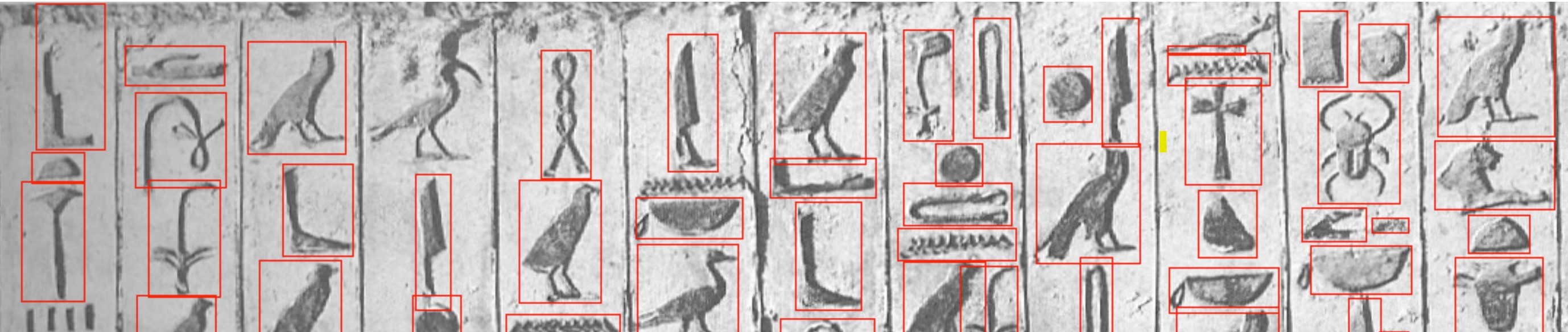
- Unsupervised Detection and Localization of Egyptian Hieroglyphs, by Pauline Lion, Elena Trunz, and Reinhard Klein, identify the location of hieroglyphs on 2D images using unsupervised methods, meaning without time-consuming manually labelled data.
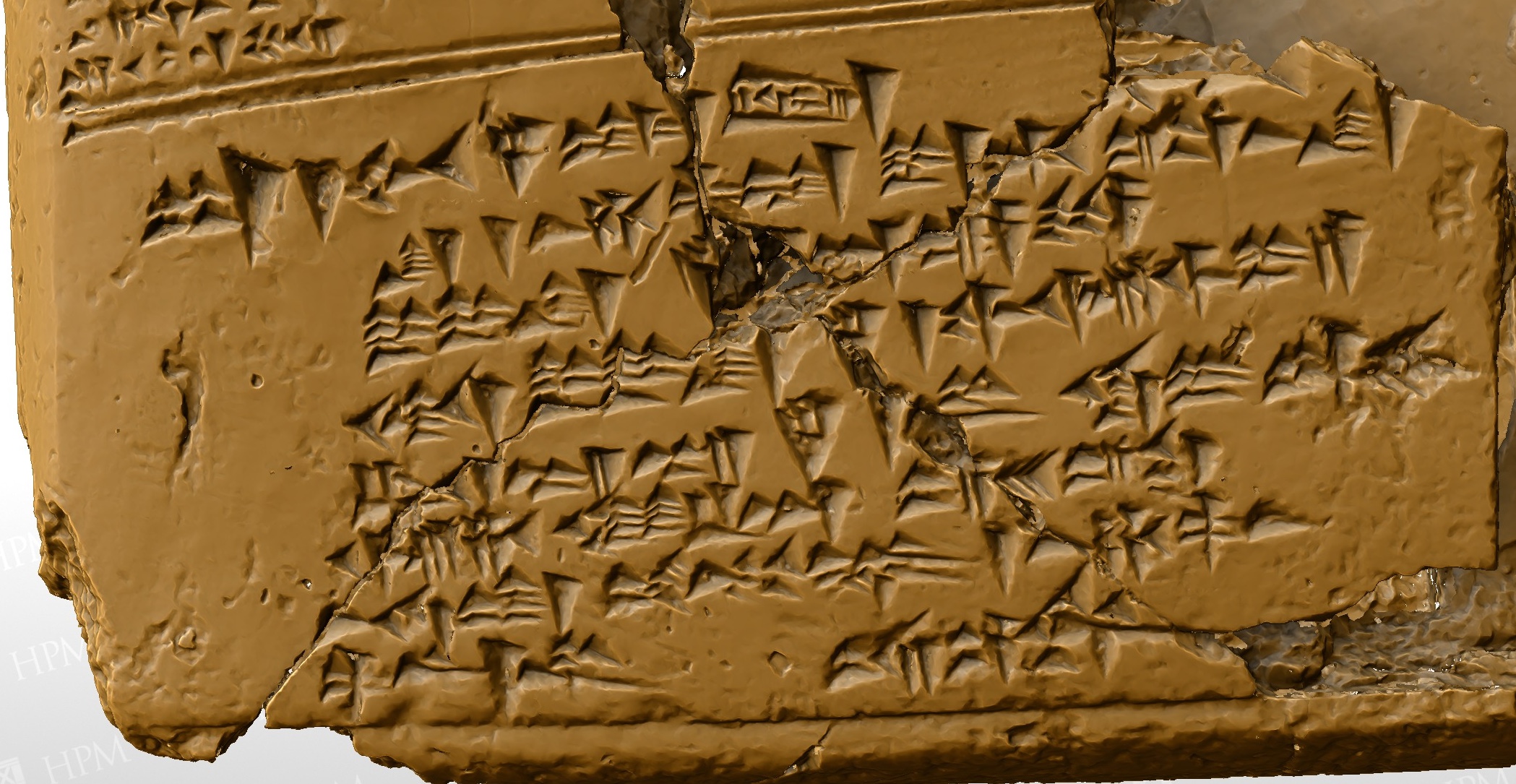
- Wedge Detection for Predictive Graphical Annotation of Cuneiform Tablets in 3D, by Jan Philipp Bullenkamp and Hubert Mara, present a method to automatically annotate cuneiform wedges from 3D models of cuneiform bearing objects using the GigaMesh software and Cuneur Annotator tool, as well as detecting wedge types according to their orientation, as described by PaleoCodage.
Immeasurable Details: Micrometric Analysis of Reed Stylus Fiber Impressions on Cuneiform Tablets (chapter in conference proceedings), by Fausta Fiorillo and Mirko Surdi, is the first to analyze the fiber remains of cuneiform reed styli, in order to primarily verify tablet joins, offering a new diagnostic technique made possible through high-resolution 3D scans of cuneiform tablets.

Highlighted Academic Publications
Use of Open Access AI in Teaching Classical Antiquity. A Methodological Proposal (article, Journal of Classics Teaching), by Carlos Díaz-Sánchez and Diego Chapinal-Heras, discusses the benefits of integrating free and open access AI algorithms in high-school and university class settings. It focuses on a possible application of the Midjourney software which operates within the Discord application.
What We Teach When We Teach DH: Digital Humanities in the Classroom (online book) by Brian Croxall and Diane K. Jakacki, discusses teaching DH at all university levels from the perspective of instructers and learners, as well as what DH pedagogy reveals about the field and its effects on learning in various curriculur structures.
Special Mention
A character encoding proposal for ED & Uruk numerals by Robin Leroy, Anshuman Pandey, and Steve Tinney, proposes adding 311 numeral characters used in the fourth and third millennia BCE (Uruk IV, Uruk III, and Early Dynastic periods), an important addition for full capabilities of representing all cuneiform characters in digital form.
The DH2024 Book of Abstracts was published on Zenodo. This yearly conference is one of the biggest in the field of digital humanities, and in recent years has included more and more representatives from the DANES research fields.
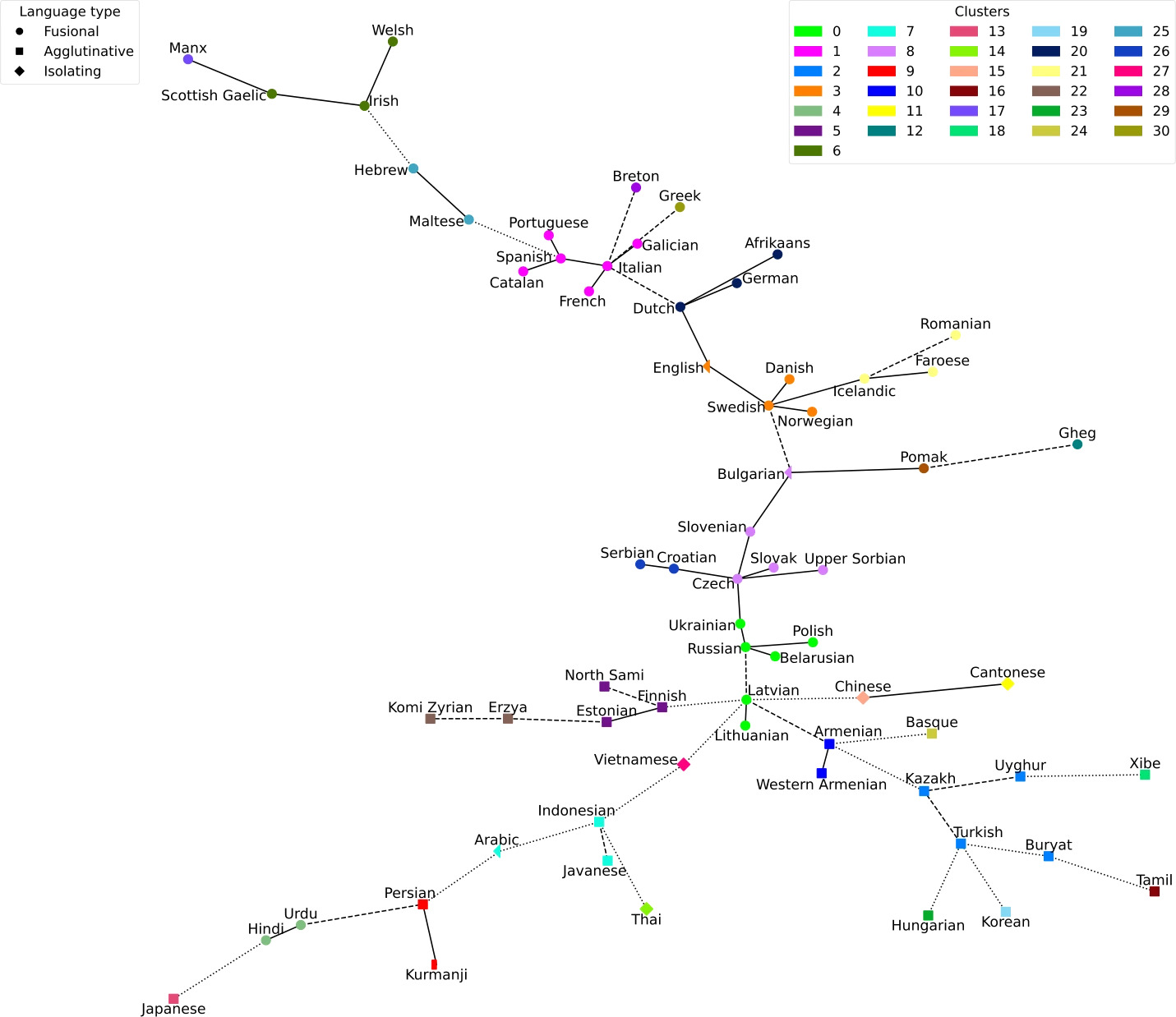
Exploring language relations through syntactic distances and geographic proximity (article, EPJ Data Science), by Juan De Gregorio, Raúl Toral, and David Sánchez, use part-of-speech sequences extracted from the Universal Dependencies dataset, and compare pair-wise distances between languages based on similarity in syntax. While their methods reveal clusters based on language families, they also detect a significant correlation between similarity in syntax and geographic proximity.
Political uses of the ancient past on social media are predominantly negative and extreme (article, Plos One), by Chiara Bonacchi, Jessica Witte, and Mark Altaweel, use close to 1.5 million Facebook posts on the topic of Brexit and sentiment analysis models to show a correlation between mentions of Iron Age, Roman, and medieval periods and extremely negative sentiments. This indicates the likelihood of the past to be misused in particulalry polarized and hostile modern discussions.
.png)
Conferences and Call for Papers
Upcoming Events
The inaugural Dublin Core Data Institute (DCDI) is hosted by the Faculty of Information, University of Toronto, on October 19, 2024. DCDI will focus on advancing open data and software resources for humanities and social science research. It will include panels on defining critical data services, international data consortium, and digital humanities centers & initiatives. Registration is required.
DaSCHCon 2024 on Arhcaeology and Interoperability, organized by the Swiss National Data and Service Center for the Humanities (DaSCH), will take place in Bern, Switzerland and online on 23 October. The conference includes several talks with case-study examples about using linked open data standards and portals to promote the interoperability of archaeological objects, as well as aid in their reconstruction. Registration is required before 9 October.
The Autumn 2024 series of Friday Frontiers webinars by DARIAH-Campus allow researchers, practitioners and stakeholders to learn about current research, best practice and social impact, and different tools and methods in digital humanities scholarly practice. On 8 November 2024, 10.30am WET / 11.30am CET / 12.30pm EET, they host the talk: Visualising Knowledge: 3D Digital Editions and Their Scholarly Potential, by Prof. Susan Schreibman (Maastricht University) and Dr. Costas Papadopoulos (Maastricht University). Registration is free but required. Talks are also recorded and later published online.
Call for Papers
The École Pratique des Hautes Études is inviting applications from French and international students for an online course cluster: Hebrew Manuscripts in the Digital Age: Palaeography, Edition, Cataloguing. Its aim is to provide the participants with traditional and digital skills and some understanding of computational possibilities in Hebrew Manuscript Studies. The course is held entirely online over several months, in English, meeting three times a week for an hour. Lectures are followed by discussions, and students are encouraged to acquire practical skills by contributing to one or more digital projects. Application deadline is 25 October, and enrollment is limited.
A new Diamond open-access journal called Transformation: A DARIAH Journal, has sent its first call for contributions on Workflows: Digital Methods for Reproducible Research Practices in the Arts and Humanities. They are looking for contributions that explore, assess, and analyze the challenges of designing, implementing, documenting and sharing digitally-enabled workflows in the context of arts and humanities research. They welcome submissions that shed light on these challenges from a technical, methodological, infrastructural and/or conceptual point of view. Submission deadline is 31 October.
The 9th Workshop on Computational Archival Science, taking place at the IEEE Big Data 2024 conference in Washington DC, December 15-18, invites papers that explore the conjunction (and its consequences) of emerging methods and technologies around big data with archival practice (including record keeping) and new forms of analysis and historical, social, scientific, and cultural research engagement with archives. Accepted papers will be published immediately after the conference by the IEEE Computer Society Press. The call for papers includes a student poster session for graduate students. Submission deadline is November 4, 2024.
The Workshop on Generative AI and Knowledge Graphs (GenAIK), taking place at the COLING 2025 conference at Abu Dhabi (UAE), January 19-24, invites papers on the use of knowledge graphs to enable accuracy, decisiveness, interpretability, domain-specific knowledge, and evolving knowledge in various AI applications, particularly for improving the applicability of large language models to real-life use cases. Such generative AI are prone to biases from training data, to generating factually incorrect information, and have difficulty in understanding complex content, all issues that knowledge graphs have been shown to alleviate. Accepted papers are published immediately after the conference at ACL anthology. Full papers (6-8 pages), short papers (4-6 pages), and position papers (2 pages) are welcomed. Submission deadline is 5 November.
Did we miss relevant articles published in the previous month? Did we miss upcoming events in the next month? Would you like to ensure your news will appear in the next newsletter? Please send us an email at digpasts@gmail.com! Corrections to published Newsletters will be sent via the DANES mailing list.