
DANES Newsletter - June 2025
Summer is approaching and it is rife with digital and computational humanities conferences, workshops, and summer schools. Many events are taking place which are excellent opportunities to get introduced to digital methodologies or mingle with some of the leading voices in digital humanities within and outside of the specific specialization of the ancient Near East. Notice that some of the registration deadlines are fast approaching!
One of the conferences waiting at the end of the summer is DANES’25! Taking place this year in mid-September in Ghent and Brussels under the title Bytes and Bygones – Digital and Computational Analyses of Ancient Cultures, registration is now open and we are looking forward to seeing as many of you as possible in person!
This month’s newsletter is particularly dense, due to the publication of the proceedings of NAACL 2025, one of the leading conferences in computational linguistics, which had an astounding presence this year of ancient languages. This continues to show the footprint of ancient Near Eastern studies in computer science and vice versa.
Recent Academic Publications
Digitizing Seth: Digital Approaches to Sethian Classification in the Coffin Texts (article, Hieroglyphs), by Jorke Grotenhuis, is a case study into the use of the hieroglyphs of Seth and the Sethian animal as classifiers in the Coffin Texts. The author studies distributional patterns in classifier strategies for lemmata that can take Sethian classifiers using the iClassifier platform, as well as a paleographic study of the animal depicted with the lemma sr (to foretell) using t-SNE clustering method.
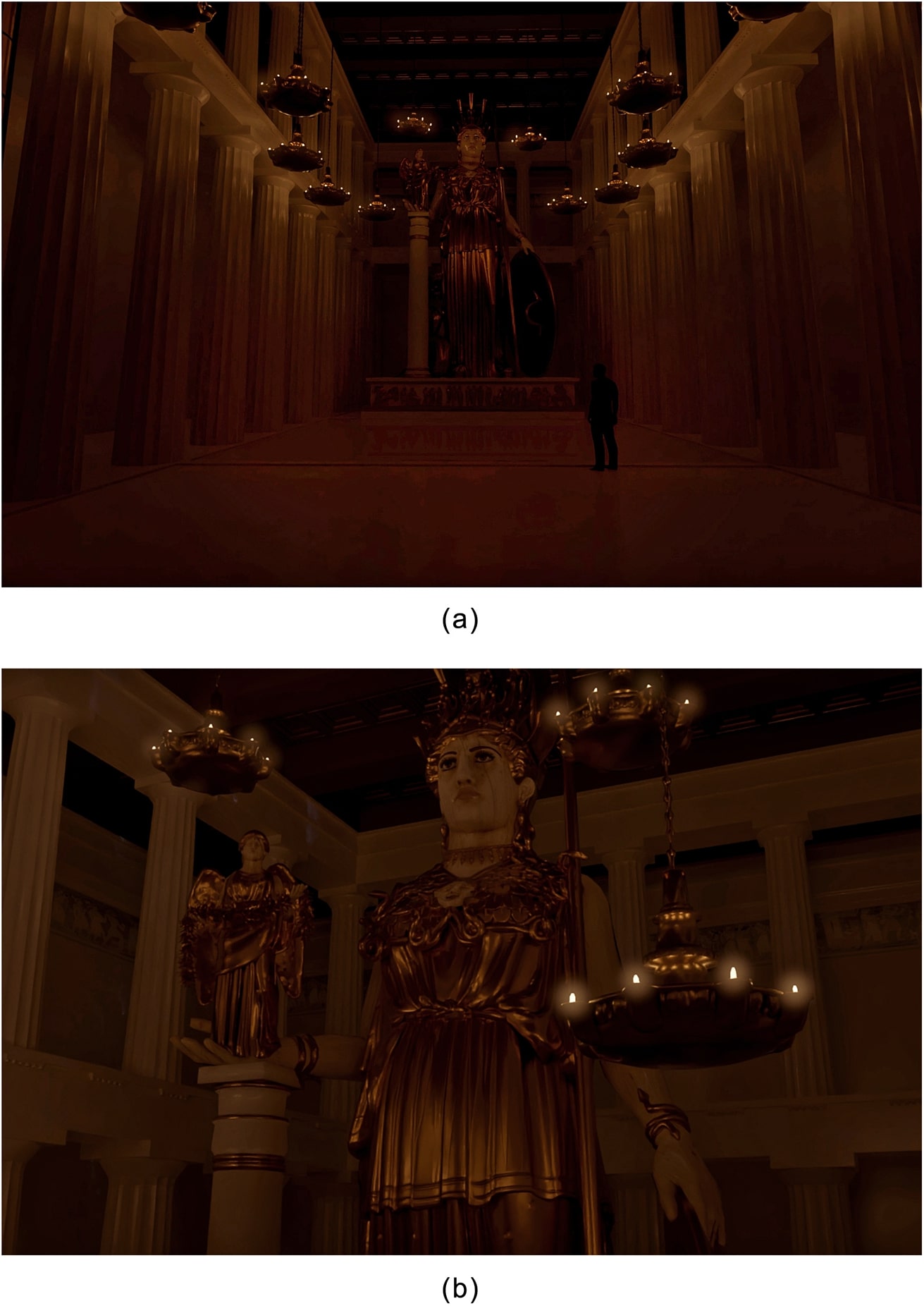
Illuminating the Parthenon (article, Annual of the British School at Athens), by Juan de Lara, created a 3D reconstruction of the Parthenon to test the validity and the effect of strategies purported to have been used to illuminate the temple, namely, the building’s orientation, windows, barriers and grilles, translucent marble ceilings, skylights, and pools. The results suggest that contrary to long-standing beliefs that the interior was brightly lit, it was in fact generally quite dark and dim.
The Old Babylonian Glossary of the ARCHIBAB Text Corpus: Results and Prospects (article, Revue d’assyriologie et d’archéologie orientale), by Ilya Arkhipov, with contributions by Dominique Charpin, Christian Gaubert and Nele Ziegler, provides an overview of the lexicographical data accumulated for Old Babylonian archival texts as part of the Archibab database. It stresses the usefulness of the database as complimentary to printed dictionaries until updated dictionaries are published, and provides a useful overview on how data is stored on Archibab which can aid users to search more efficiently.
Proceedings of the North American Chapter of the Association for Computational Linguistics (NAACL): NAACL, one of the prominent annual conferences in computational linguistics, took place in May and its proceedings were published immediately after it concluded. This year NAACL included the Second Workshop on Ancient Language Processing (edited by Adam Anderson, Shai Gordin, Bin Li, Yudong Liu, Marco C. Passarotti, and Rachele Sprugnoli), which includes many articles relevant to the DANES community, such as:
- Accessible Sanskrit: A Cascading System for Text Analysis and Dictionary Access, by Giacomo De Luca
- Assignment of account type to proto-cuneiform economic texts with Multi-Class Support Vector Machines, by Piotr Zadworny and Shai Gordin
- Automatic Text Segmentation of Ancient and Historic Hebrew, by Elisha Rosensweig, Benjamin Resnick, Hillel Gershuni, Joshua Guedalia, Nachum Dershowitz, and Avi Shmidman
- The Development of Hebrew in Antiquity – A Computational Linguistic Study, by Hallel Baitner, Dimid Duchovny, Lee-Ad Gottlieb, Amir Yorav, Nachum Dershowitz, and Eshbal Ratzon
- From Clay to Code: Transforming Hittite Texts for Machine Learning, by Emma Yavasan and Shai Gordin
- Integrating Semantic and Statistical Features for Authorial Clustering of Qumran Scrolls, by Yonatan Lourie, Jonathan Ben-Dov, and Roded Sharan
- Towards Ancient Meroitic Decipherment: A Computational Approach, by Joshua N. Otten and Antonios Anastasopoulos
- Towards an Integrated Methodology of Dating Biblical Texts: The Case of the Book of Jeremiah, by Martijn Naaijer and Aren Wilson-Wright
- Neural Models for Lemmatization and POS-Tagging of Earlier and Late Egyptian (Supporting Hieroglyphic Input) and Demotic, by Aleksi Sahala and Eliese-Sophia Lincke
- ParsiPy: NLP Toolkit for Historical Persian Texts in Python, by Farhan Farsi, Parnian Fazel, Sepand Haghighi, Sadra Sabouri, Farzaneh Goshtasb, Nadia Hajipour, Ehsaneddin Asgari, and Hossein Sameti
The workshop also included a shared task force on lemmatization and masked token prediction (reconstructing missing sections of texts), the results of which are introduced in the following articles:
- EvaCun 2025 Shared Task: Lemmatization and Token Prediction in Akkadian and Sumerian using LLMs, by Shai Gordin, Aleksi Sahala, Shahar Spencer, and Stav Klein
- Beyond Base Predictors: Using LLMs to Resolve Ambiguities in Akkadian Lemmatization, by Frederick Riemenschneider
- Finetuning LLMs for EvaCun 2025 token prediction shared task, by Josef Jon and Ondřej Bojar
- Lemmatization of Cuneiform Languages Using the ByT5 Model, by Pengxiu Lu, Yonglong Huang, Jing Xu, Minxuan Feng, and Chao Xu
- A Low-Shot Prompting Approach to Lemmatization in the EvaCun 2025 Shared Task, by John Sbur, Brandi Wilkins, Elizabeth Paul, and Yudong Liu
In addition, below are several articles that were presented in other NAACL sessions and workshops, that relate to DANES:
- An Annotated Dataset of Errors in Premodern Greek and Baselines for Detecting Them, by Creston Brooks, Johannes Haubold, Charlie Cowen-Breen, Jay White, Desmond DeVaul, Frederick Riemenschneider, Karthik R Narasimhan, and Barbara Graziosi
- Automating Violence Detection and Categorization from Ancient Texts (primarily Greek and Latin), by Alhassan Abdelhalim and Michaela Regneri
- Computational Discovery of Chiasmus in Ancient Religious Text (Hebrew Bible), by Hope McGovern, Hale Sirin, and Tom Lippincott
- HieroLM: Egyptian Hieroglyph Recovery with Next Word Prediction Language Model, by Xuheng Cai and Erica Zhang
- LITERA: An LLM Based Approach to Latin-to-English Translation, by Paul Rosu
- RAG-Enhanced Neural Machine Translation of Ancient Egyptian Text: A Case Study of THOTH AI, by So Miyagawa
Special Mention
Historians use data science to mine the past (article, PNAS), by Carolyn Beans, elaborates on common tools taken from the field of data science for historical studies aimed at those without any technical background. Providing examples and case-studies primarily from the early modern period, the advantages and disadvantages of such methods are described, as well as how historians critically engage with the results of their models.
Datasets Published
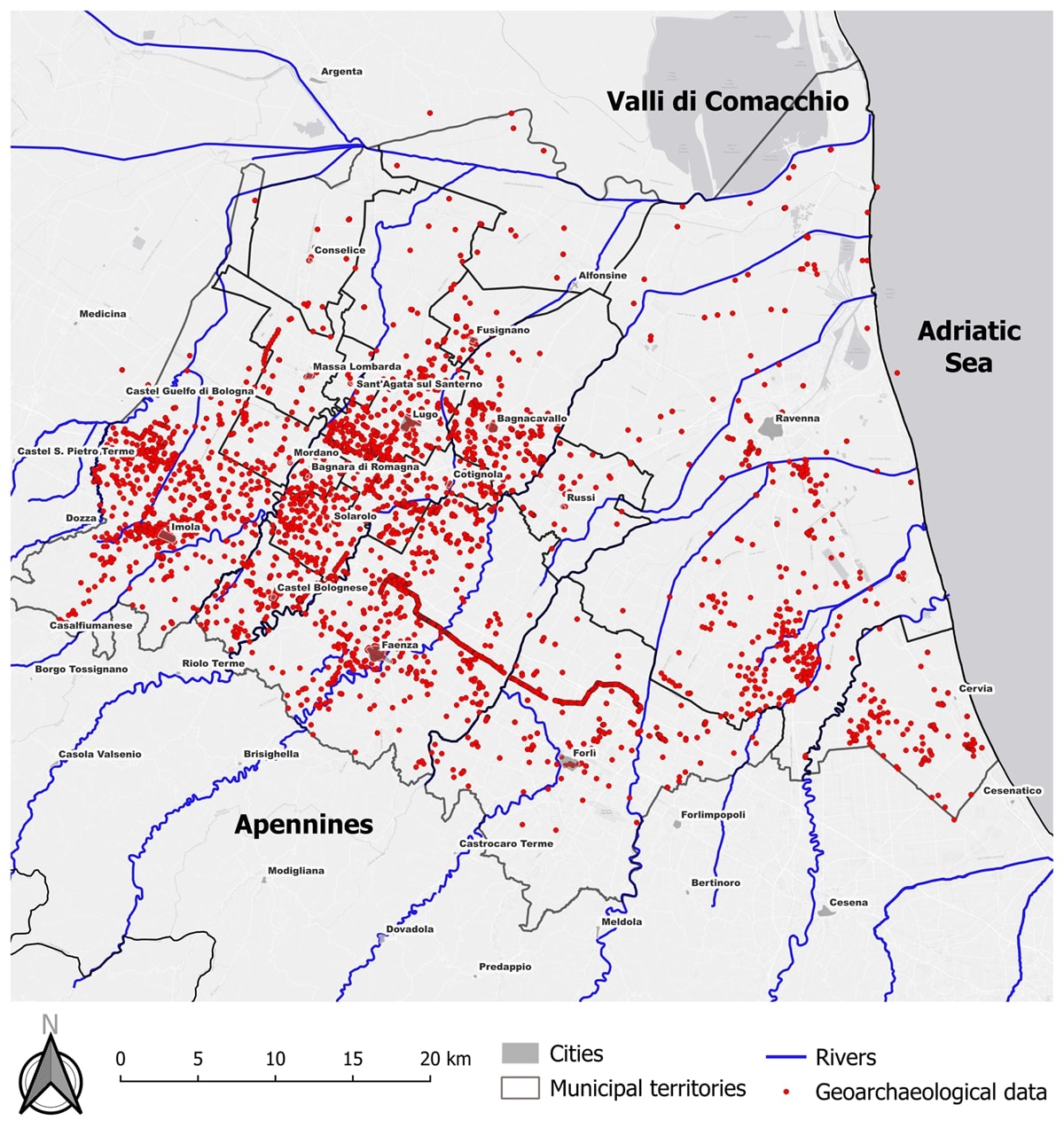
Geoarchaeology and PalaeoDEMs Modelling to Assess the Archaeological Potential of Ravenna and Its Hinterland (Journal of Open Archaeology Data), by Michele Abballe, presents a collection of nine databases on the hinterland of Ravenna in northern Italy, to study landscape transformations in the region, from the Palaeolithic (~10,000 BCE) to the Contemporary Age (~2000 CE).
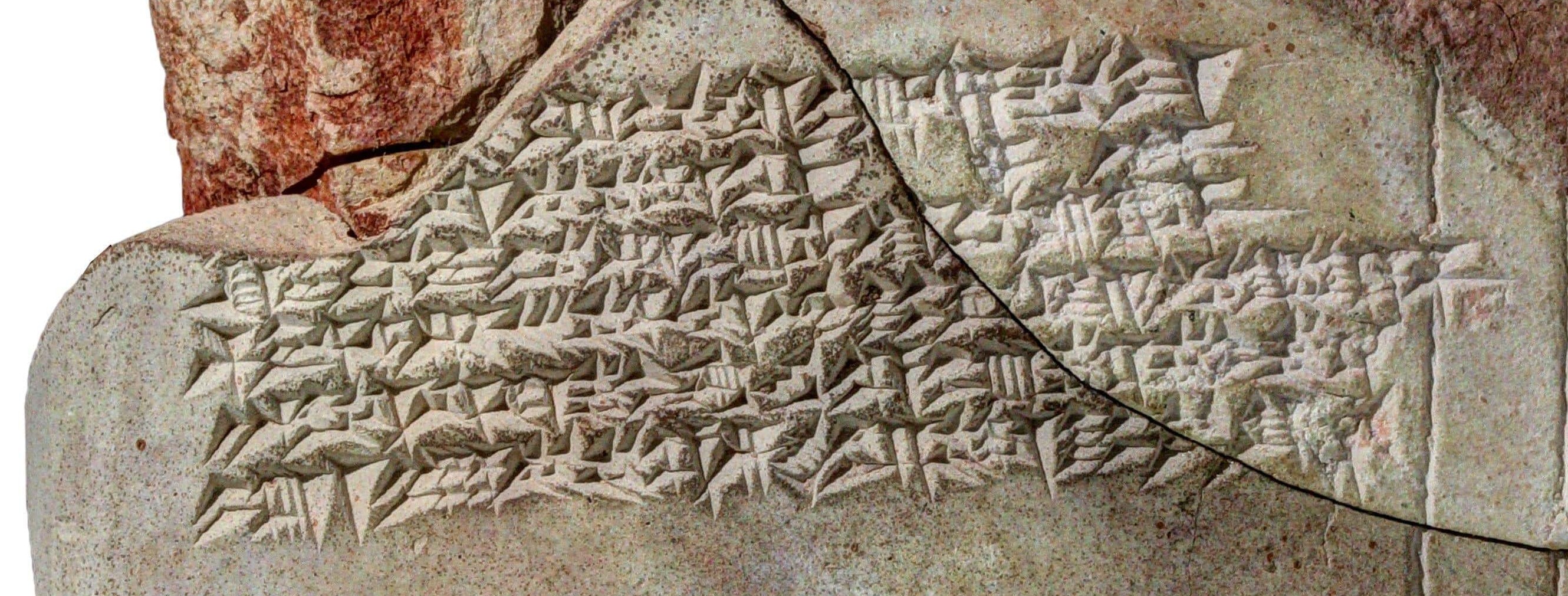
Thesaurus Linguarum Hethaeorum digitalis (TLHdig) Beta Version 0.2 (Zenodo), by Gerfrid Müller, Doris Prechel, Elisabeth Rieken, and Daniel Schwemer, contains the XML documents of the online database Thesaurus Linguarum Hethaeorum digitalis (TLHdig) Beta Version 0.2, which is part of the Hethitologie-Portal Mainz. It includes transliterations of more than 98% of all published cuneiform fragments from Hittite tablet collections, though they state the quality of the data contained in TLHdig is uneven and under constant development.

Events
Talks and Conferences
The Seminar Close Encounters of the Egyptological Kind: Digital Humanities and Egyptology, organized by The Institute for the History of Ancient Civilizations (IHAC) School of History and Culture - Northeast Normal University (NENU), will take place on 3-4 June as a hybrid event. It includes talks on social network analysis and Egyptology, some current digital projects, and the current state of artificial intelligence for Egyptology. See link for registration details.
The annual DH Benelux Conference serves as a platform for the community of interdisciplinary digital humanities researchers to meet, present and discuss their latest research findings and to demonstrate tools and projects. This year’s conference will take place at Vrije Universiteit Amsterdam on 3-6 June, and will include workshops, paper presentations, posters, and demonstrations. See the program and the registration details.
The Collaboration beyond Boundaries conference, organized by the UK-Ireland Digital Humanities Association, is taking place on 17–18 June at the University of Glasgow and some sessions streamed online. Many talks focus on the theme of collaboration in the context of digital humanities research (see program). Registration is required.
The DARIAH Annual Events combine different forms of encounter and exchange between DARIAH researchers and the wider cultural heritage, arts and humanities, as well as computer, information and data science communities. This year’s event explores the topic of the Past, taking place on 17-20 June in Göttingen, Germany. The conference aims to highlight innovative approaches to studying the past through digital methods and computational analyses (see program). Registration is free but required and will be open until 4 June.
DH2025, organized by the Alliance of Digital Humanities Organizations, takes place this year on 14-18 July in Lisbon, Portugal and online. This is one of the biggest annual conferences in digital humanities, with parallel sessions and training workshops on various DH skills (see program). Registration is open until 2 June.
The third Digital Ancient Near Eastern Studies Conference (DANES’25), Bytes and Bygones – Digital and Computational Analyses of Ancient Cultures, is taking place on 15-18 September in Ghent and Brussels. It will include three keynotes and four thematic tracks: Digitization, Language Analysis, and Digital Cultural Heritage and Application. The last day of the conference includes two workshops for PhD students, one on linked open data and another on stylometry (see program). Registration is open until 15 July.
The Connected Past conference, taking place in-person in Coimbra, Portugal on 16-19 September, is focused on the application of network science and network theory in history, archaeology, and related disciplines (see program). The conference is preceded by a workshop on network science, capped at 25 participants. Early bird registration is open until 30 June; Late registration is open until 5 September.
Training Opportunities
The DH2025 conference includes several workshops for gaining DH skills: see program and more details above. Registration to the conference is required for participation in the workshops.
The University of Cologne is organizing a summer school: Large Language Models for Digital Humanities Research, taking place in person on 8-11 Sept 2025. The first two days of the summer school are devoted to an introduction to large language models and prompt engineering, and in the following two days participants can choose between four specialized tracks: Large Language Models for Qualitative Data Analysis, Deep Learning in the Computational Literary Studies, LLM-Supported Modeling, Operationalization, and Exploration for Digital Editions, or Using LLMs for Psycholinguistic Research. Registration deadline is 1 June - see details in link above.
Call for Papers
The Computational Humanities Research Conference (CHR 2025), will take place on 9-12 December, at the Luxembourg Centre for Contemporary and Digital History (C²DH) at the University of Luxembourg. The conference aims to build an inclusive community of researchers who apply computational and quantitative methods to humanities data in all its forms, as well as fostering transparency and reproducibility. They invite papers on topics which include applications of statistical methods and machine learning to humanities data; hypothesis-driven humanities research, simulations and generative models; modeling bias, uncertainty, and conflicting interpretations; theoretical frameworks and epistemology for quantitative methods and computational humanities approaches; visualization, dissemination and teaching in computational humanities; and more. They accept long and short papers as well as lightening talks and workshop proposals. Submissions need to be publication-ready (not abstracts). Submission deadline is 18 July.
Did we miss relevant articles published in the previous month? Did we miss upcoming events in the next month? Would you like to ensure your news will appear in the next newsletter? Please send us an email at digpasts@gmail.com! Corrections to published Newsletters will be sent via the DANES mailing list.