
DANES Newsletter - August 2025
Many new articles relevant to DANES were published in the past two months in leading publications. The increase and recognition in the work of our field is exciting! Looking forward to more of your feedback on the monthly newsletter as our community and its needs are growing.
A new white paper has been published on OpenDANES! Musical Instruments in Ancient Mesopotamia (MIAM) A Semantic Media Wiki Database and Lexicon, by Dahlia Shehata, Benedetta Bellucci, and Tomash Shtohryn. This is a presentation of a research project which aims to collect, classify and interpret musical instruments, their terminology, iconography and contexts, based on texts, images and original finds. The outcome is presented in an online database and lexicon based on Semantic MediaWiki technology. The white paper is citable with a DOI.
A special collection in Nature Humanities & Social Sciences Communications called From bits of history to bytes of data: AI and the study of the ancient Near East is sending out a call for contributions. They invite contributions that are related to data covering a large geographical area from the Iranian highlands to the Eastern Mediterranean including Egypt and the Sudan, and chronologically from the origins of writing until 1500 CE, using digitization or computational methodologies. The contributions should reveal how digital methodologies are not just tools but gateways to deeper questions about human organization, creativity, and cultural transmission in the ancient world. They should showcase how the true power of digital approaches lies not in the technology itself, but in its ability to illuminate the richly textured fabric of ancient human experience. The collection accepts rolling submissions, meaning you may submit your manuscript at any time until 13 December 2025, and accepted manuscripts are submitted immediately after peer review.
Do not forget to register to the third Digital Ancient Near Eastern Studies Conference (DANES’25), Bytes and Bygones – Digital and Computational Analyses of Ancient Cultures! Looking forward to see as many of you as possible there :-)
Recent Academic Publications
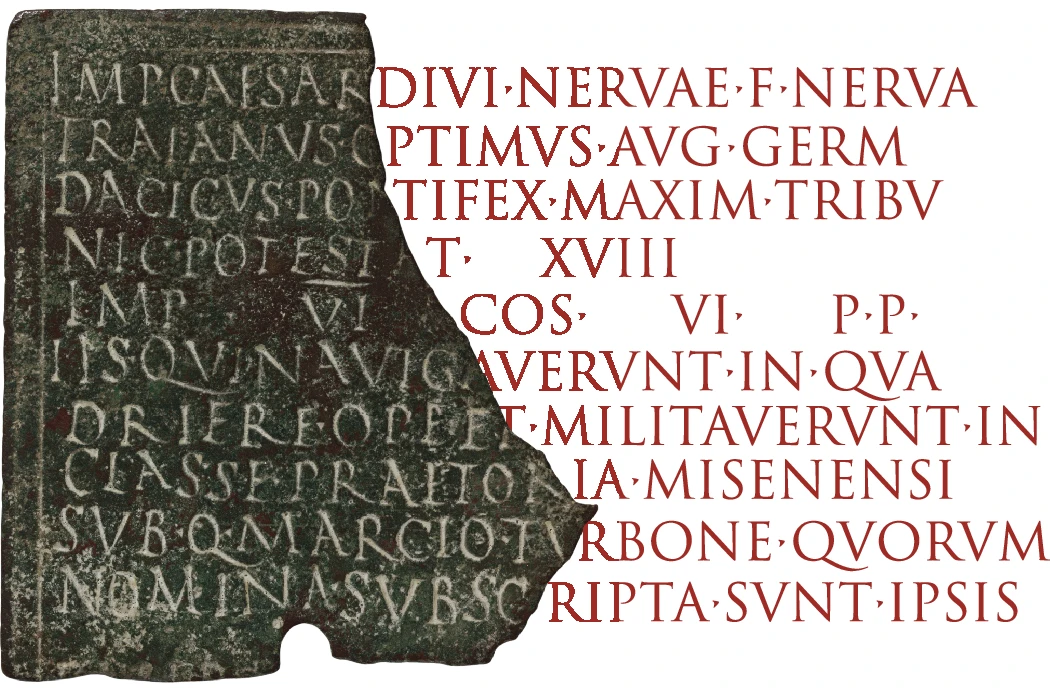
Contextualizing ancient texts with generative neural networks (article, Nature), by Yannis Assael, Thea Sommerschield, Alison Cooley, Brendan Shillingford, John Pavlopoulos, Priyanka Suresh, Bailey Herms, Justin Grayston, Benjamin Maynard, Nicholas Dietrich, Robbe Wulgaert, Jonathan Prag, Alex Mullen, and Shakir Mohamed, presents Aeneas, a multimodal generative neural network for contextualizing Latin inscriptions through restoration (of arbitrary length) and geographical and chronological attribution. It integrates both visual and textual input to provide historians a list of textual and contextual epigraphic parallels. They show how combining Aeneas in the philological workflow creates more accurate results compared to Aeneas or historians working alone.
Critical biblical studies via word frequency analysis: Unveiling text authorship (article, PLOS ONE), by Shira Faigenbaum-Golovin, Alon Kipnis, Axel Bühler, Eli Piasetzky, Thomas Römer, and Israel Finkelstein, offers a new statistical and interpretable method for dating biblical texts by establish the statistical features of the old layer in Deuteronomy (D), texts belonging to the “Deuteronomistic History” (DtrH), and the Priestly writings (P), and then assessing the attribution of disputed biblical texts. The lead author has also shared a recording explaining the article in simpler language.
Dating ancient manuscripts using radiocarbon and AI-based writing style analysis (article, PLOS ONE), by Mladen Popović, Maruf A. Dhali, Lambert Schomaker, Johannes van der Plicht, Kaare Lund Rasmussen, Jacopo La Nasa, Ilaria Degano, Maria Perla Colombini, Eibert Tigchelaar, trained a new AI-based date-prediction model, which can predict 14C-based dates with varied mean absolute errors (MAEs) of 27.9 to 30.7 years, based on palaeographic features of the Dead Sea Scrolls. The new 14C dates sampled in this study and the model’s palaeography-based prediction are often older then previously assumed for the Qumran corpus, offering a new chronology for the scrolls and their historical context.
Detection and Classification of Ancient Cuneiform Script Writing Using the YOLOv8 Model (conference paper, Proceedings of Data Analytics and Management), by Elaf A. Saeed, Ammar D. Jasim, and Munther A. Abdul Malik, created a new dataset of cuneiform inscriptions primarily from 300 new images of objects in the Iraq Museum. They then train two computer vision models: one to identify whether an inscription is written in Sumerian, or one of the two main dialects of Akkadian: Babylonian and Assyrian. They also chose 11 Neo-Assyrian signs to annotate and identify in images of cuneiform inscriptions.
Is archaeology a science? Insights and imperatives from 10,000 articles and a year of reproducibility reviews (article, Journal of Archaeological Science), by Ben Marwick, assesses archeaology’s place between the hard sciences, social sciences, and the humanities through five bibliometric measures: number of authors, relative title length, article length, recency of references, and diversity of references. It also discusses insight on reproducibility of quantitative results published in archaeology journals, and calls for better practice with practical steps scholars can take to ensure rigor and verifiability.
Metronome: tracing variation in poetic meters via local sequence alignment (article, Computational Humanities Research), by Ben Nagy, Artjoms Šeļa, Mirella De Sisto, and Petr Plecháč, takes inspiration from DNA sequencing techniques to classify prosodic templates across multiple languages: Czech, German, Russian and Classical Latin. They detect structural similarities in poems using local sequence alignment which allows poems to be clustered according to emergent properties of their underlying prosodic patterns. They also offer three short case studies, including one on the poems of Catullus.
On automatic decipherment of lost ancient scripts relying on combinatorial optimisation and coupled simulated annealing (article, Frontiers), by Fabio Tamburini, introduces a novel optimization method for detecting cognates between pairs of languages from the same language family. He tests his method on previously published corpora, specifically Ugaritic/Old Hebrew and Linear B/Mycenaean Greek. The author also prepared new parallel corpora of ancient Eastern Mediteranean languages, specifically Cypriot Syllabary/Arcadocypriot Greek, Phoenician/Ugaritic, and Luwian/Hittite. The article further provides a thorough overview of previous attempts of computational decipherments of ancient languages.
The Sixth Generation of the Perseus Digital Library and a Workflow for Open Philology (article, Transformations: A DARIAH Journal), by Gregory Crane, James Tauber, Alison Babeu, Lisa Cerrato, Charles Pletcher, Clifford Wulfman, Sergiusz Kazmierski, and Farnoosh Shamsian, introduces the innovations of the latest version of the Perseus Digital Library project, primarily, expanding the interface to present born-digital annotations of the texts in the corpora, such as parallel translations, metrical annotations, place name disambiguation, and more.
Matters of Genre, Style, and Orthography: Hittite Scribal Habits through the Stylometric Lens (book chapter, StBoT 73), by Shai Gordin, Emma Yavasan, and Avital Romach, uses stylometric methods to retrace streams of tradition in Hurrian-Hittite festival ritual texts. They test several statistical methods to assess connections between different groups based on previous categorization in literature, and provide a close case study on text group CTH 701, rituals of the AZU priest (“exorcist”).
Special Mention
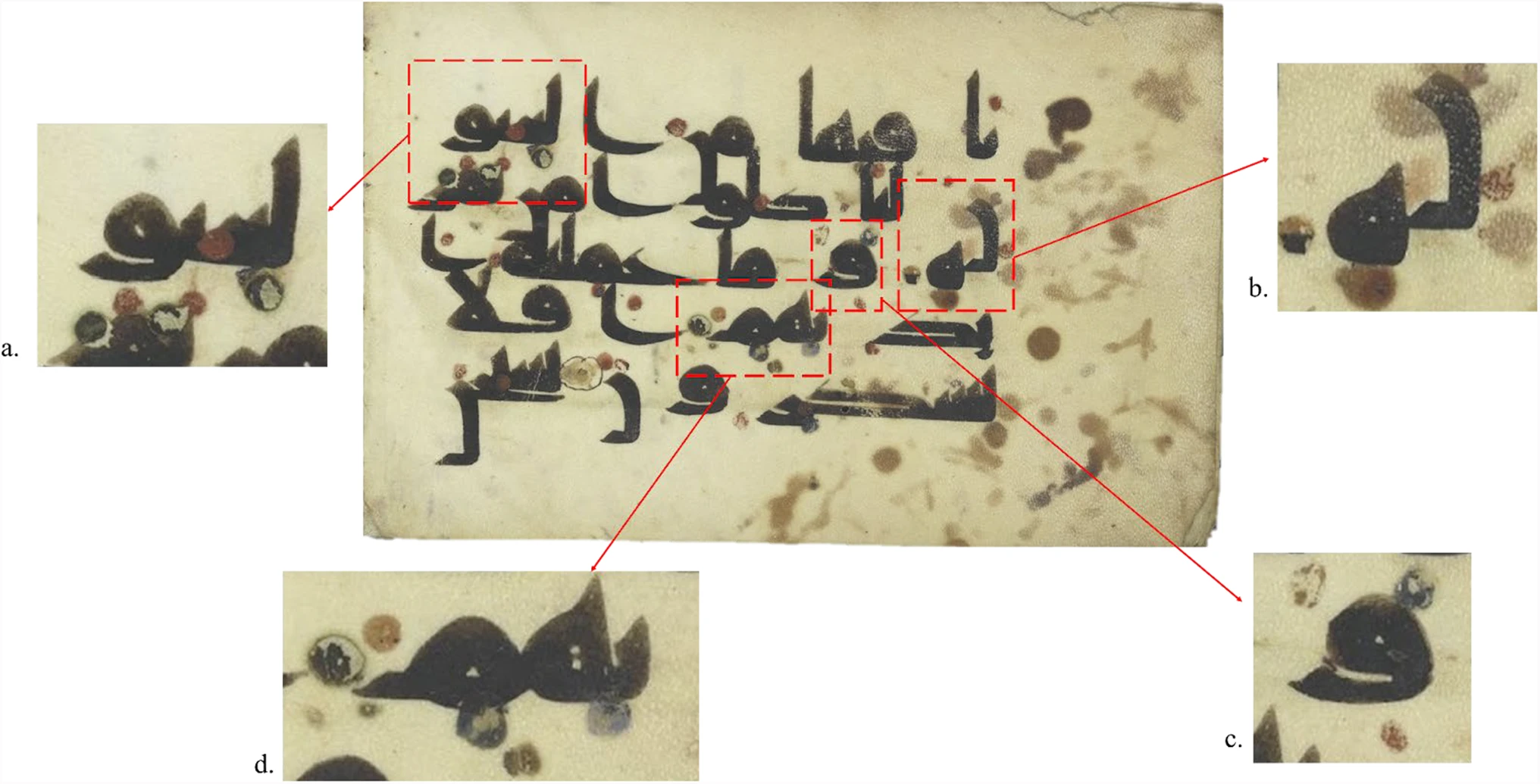
Archaeometric philology for the study of deteriorated and overlapping layers of ink: the colour code of an early Qur’anic fragment (article, The European Physical Journal Plus), by Giuseppe Marotta, Alba Fedeli, Sowmeya Sathiyamani, and Claudia Colini, reconstructs pigments of diacritics which hold semiotic values using non-invasive material analysis methods. These allow a comprehensive assessment of the writing materials, identifying the nature of the deteriorated pigments and the rules of the adopted colour code.
Artificial Intelligence for Calligraphic Writer Identification: The Case of Lope de Vega’s Autographs (article, Hipogrifo), by Álvaro Cuéllar and Sònia Boadas, adapted Transkribus, a program designed to train Handwritten Text Recognition (HTR), to instead identify characters that were written by a specific scribe. The use of Transkribus lowers the threshold for training such models, and their findings pave the way for training models for hands of particular interest (authors, censors, copyists, bureaucrats, actors, etc.).
The Cuneiform Digital Library Initiative: A Primer (Mar Shiprim and Zenodo), by Rune Rattenborg and Émilie Pagé-Perron, originally published in Mar Shiprim, is an introduction on how to use the current CDLI interface for searching cuneiform artefacts, as well as how to contribute to the data collections.
The impact of language models on the humanities and vice versa (comment, Nature Computational Science), by Ted Underwood, summarizes the current state of the interface between large language models and the humanities, specifically, how each field can benefit from the other, and how now more than ever there can be productive conversations between computer scientists and humanists.
Navigating Artificial Intelligence for Cultural Heritage Organisations (book, UCL Press), edited by Lise Jaillant Claire Warwick, Paul Gooding, Katherine Aske, Glen Layne-Worthey, and J. Stephen Downie, has been designed to reflect current and state-of-the-art technologies and innovations for the preservation and accessibility of digitised and born-digital records, to help navigate the future of AI for cultural heritage organisations.
Datasets Published
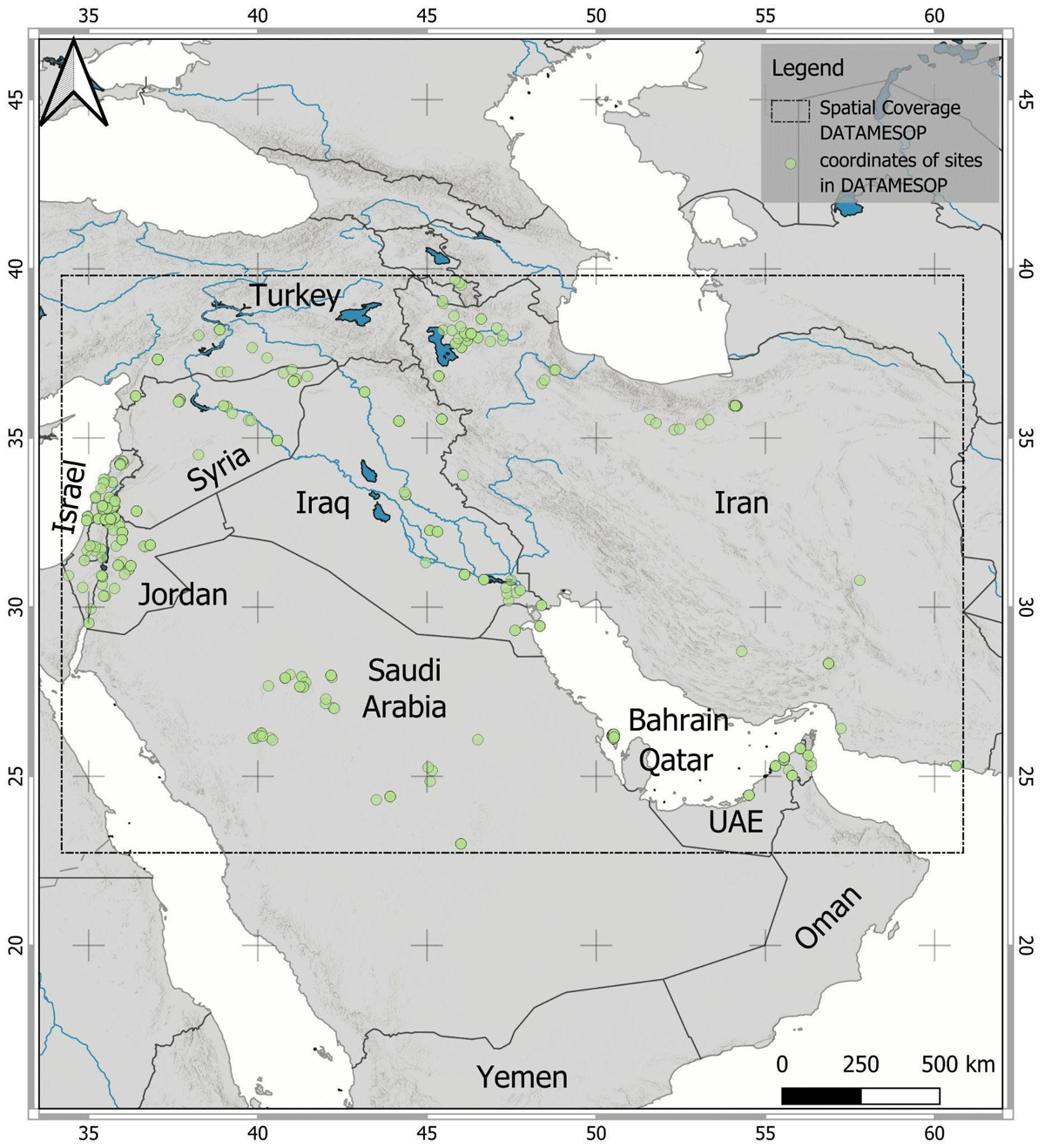
DATAMESOP: DATAset on Stable Isotope Measurement (Strontium, Oxygen and Carbon) of Archaeological and Non-Archaeological Materials from South-West Asia for MESOPotamia (Journal of Open Archaeology Data) by Matteo Giaccari, Licia Romano, Franco D’Agostino, and Mary Anne Tafuri, includes 2,540 radiogenic strontium and stable carbon, and oxygen isotopic measurements from both archaeological (human, animal remains and plant and soil samples) and non-archaeological sources (surface rocks, soil, dust, water, and rainwater), focusing on regions along the ancient Mesopotamian trade routes from the 7th</sup> to 1st</sup> millennia BCE.
Field Data from the West Area of Samos Archaeological Project (WASAP), 2021–2024 (Journal of Open Archaeology Data), by Michael Loy, Katerina Argyraki, Anastasia Christophilopoulou, Georgia Delli, Matthew Evans, Sabine Huy, Alexandra Katevaini, Naoíse Mac Sweeney, Jana Mokrišová, Enrico Regazzoni, and Anastasia Vasileiou, published the results of their field work which were born-digital, covering the period ca. 800 BCE to 1900 CE. Their work includes reconnaissance survey, pedestrian fieldwalking, ethnographic research, and drone photography.
From Villages to Empires: Archaeological Settlements of the South Levant from the Chalcolithic to the Byzantine Period (Journal of Open Archaeology Data), by Andrea Titolo and Alessio Palmisano, is a geospatial database which includes 5,542 archaeological sites in the Southern Levant with accompanying data on periods of occupation, location, estimated size, typology, and bibliographical information. The data was collected from published archaeological surveys, online databases, and excavation reports.
The Phoenician-Punic Micro-Islands Project: An Open-Access Geospatial Corpus for Mediterranean Archaeology (Journal of Open Archaeology Data), by Daniel Rioja González, documents 125 micro-islands (≤20 km²) with evidence of Phoenician-Punic activity across the Mediterranean-Atlantic region, collected from archival research, satellite imagery analysis, and fieldwork, with coordinates cross-referenced against historical cartography and archaeological reports. It includes geographic boundaries, site descriptions, and temporal spans (12th cent. BCE to 4th cent. CE).
M/OTHERING: A Database of Terracotta Votive Figurines Representing Adults with Subadults from Ancient Italy (Journal of Open Archaeology Data), by Giulia Pedrucci, Ricardo Fernandes, and Carlo Cocozza, holds metadata for 2,725 terracotta votive figurines of adults and subadults from 625-27 BCE discovered in Etruria, Latium, Magna Graecia, and Sicilia. It includes iconographic data along with historical, archaeological, chronological, and spatial metadata.
Events
Talks and Conferences
A final reminder! The third Digital Ancient Near Eastern Studies Conference (DANES’25), Bytes and Bygones – Digital and Computational Analyses of Ancient Cultures, is taking place on 15-18 September in Ghent and Brussels. It will include three keynotes and four thematic tracks: Digitization, Language Analysis, Image Analysis, and Digital Cultural Heritage and Application. The last day of the conference will hold two workshops for PhD students, one on linked open data and another on stylometry (see program). Registration deadline has been extended to 15 August.
The Scientific Advances in the Study of Cuneiform Collections and Scribal Practices in the Ancient Middle East workshop, a result of the “Reading beneath the texts: technological aspects of cuneiform ‘tablet’ production” conducted at the Department of Scientific Research of the British Museum, will be held at the British Museum on 10 September. It brings together interdisciplinary scholars that employ new scientific methods to cuneiform collections, such as material analysis of cuneiform objects and imaging techniques. Registration is open.
The TEI Annual Conference and Members’ Meeting is taking place in person at Jagiellonian University (Kraków, Poland), 16–20 September. The Text Encoding Initiative (TEI) is a consortium that develops and maintains international standards for representing texts in digital form, primarily through XML markup guidelines. TEI provides a comprehensive framework for encoding literary, linguistic, and historical texts to preserve their structure, meaning, and scholarly annotations in a standardized, machine-readable format. This year’s theme is New Territories, and the conference talks include many case-studies using TEI as well as the future of TEI. Follow the registration link to attend.
The Friday Frontiers webinars of DARIAH include talks about current research, best practice and social impact, and different tools and methods in digital humanities scholarly practice. The first webinar on 3 October will hold a talk by Sébastien Plutniak (CNRS) and Élisa Caron-Laviolette (UMR 8068 TEMPS, Nanterre) on: Fostering Data Sharing in the Humanities with Open-source software: archeoViz and the archeoViz Portal for Spatial and Statistical Exploration of Archaeological Data. Follow the link to register. Presentations are all recorded and published at a later date on DARIAH-Campus.
Training Opportunities
Coding Provenance: Workshop on Computational Provenance Research will take place in Leuphana University of Lüneburg, December 18–21, 2025. It is an annual series that explores how computational methods and techniques can open new pathways for analyzing, interpreting, and rethinking provenance data. The program combines lectures, hands-on sessions, and open discussions. Accepted participants need also attend two preparatory sessions that take place online. The workshop is open to provenance researchers, museum professionals, and humanities scholars with at least a completed Master’s degree. Only 16 participants will be accepted. Application deadline is 24 August.
Call for Papers
The Emerging Digital Methodologies Conference, hosted by the Cheng Kar Shun Digital Hub at Jesus College, Oxford, will take place on 18 November. They invite presenters from any discipline to submit papers on new applications of digital methods; use case and problems of any digital method; and how digital methodologies are changing their field. Submission formats are 7-minute lightning talks, 15-minute papers, and 30-minute roundtable conversations (minimum three participants). Submission deadline is 12 August.
The Digital Classicist Seminar Berlin, organized by the Berlin Antike-Kolleg in cooperation with the Zentrum Grundlagenforschung Alte Welt at the BBAW, the Institute of Computational Ancient Studies (FU Berlin), the Department of History (HU Berlin), and the German Archaeological Institute, is opening a call for papers for the winter semester 2025/26. This year’s theme is “Potential and Limits of Digital Methods”: presentations should highlight new innovative approaches to digital research on antiquity, but also critically reflect on where its limitations lie and why this is the case. Submission deadline is 16 August.
The Digital Humanities Quarterly invites authors to submit abstracts for a special issue devoted to the topic of artificial intelligence (AI). They are interested in contributions which discuss different methodologies and applications, critical perspectives on AI, specific and grounded applications including but not limited to: translation, transcription, OCR correction, summarization, captioning, text to speech, and multi-modal approaches, and more. Submissions should focus on research rather than pedagogy, as a second call for papers on AI and pedagogy will appear later this year. Abstracts are due by 15 September.
The workshop Digital Resources, Tools, and Applications for the Study of Texts in Ancient Greek and Latin, will take place on 17-19 November in Bar-Ilan university (Israel). Its objective is to bring together scholars involved in digital applications and digital research for the study of classical texts in ancient Greek and Latin, with an emphasis on advanced methods for textual analysis such as authorship attribution, text reuse detection, topic modelling, cross-language intertextuality, etc. Those interested in presenting a paper can send an email with the title of their talk and a short abstract to stephanie.e.binder@gmail.com.
Fellowships, Scholarships, and Job Opportunities
Job opprtunity as Research Associate in Egyptology (65% position, E13 TV-L Berlin scale) in The Berlin-Brandenburgische Akademie der Wissenschaften (BBAW) project “Strukturen und Transformationen des Wortschatzes der ägyptischen Sprache. Text und Wissenskultur im alten Ägypten” starting 1 October, 2025. The role involves digitizing and processing Egyptian religious texts from the 30th Dynasty and Greco-Roman period in hieroglyphic, hieratic, and demotic scripts for the Thesaurus Linguae Aegyptiae (TLA) digital corpus. Candidates must have a Master’s degree in Egyptology with demonstrated expertise in Egyptian texts from the 1st millennium BCE, plus excellent German or English language skills. The initial 24-month contract has potential for long-term employment continuation. Application deadline is 31 August.
PhD program scholarship opportunity: the Berlin Graduate School of Ancient Studies is offering four scholarships for international PhD Students, each running for four years. Two scholarship are within the program “Ancient Languages and Texts”, which focuses on the written heritage of ancient cultures through the lens of traditional philological methods combined with historical and cultural issues, theories and approaches of modern literary studies and linguistics, as well as topics and methods in the digital humanities and computer philology. The two other scholarship are within the program “Ancient Objects and Visual Studies”, which focuses on the effects of images and the mechanisms that make up communication with images. Application deadline for all scholarships is 15 October.
Did we miss relevant articles published in the previous month? Did we miss upcoming events in the next month? Would you like to ensure your news will appear in the next newsletter? Please send us an email at digpasts@gmail.com! Corrections to published Newsletters will be sent via the DANES mailing list.