
DANES Newsletter - October 2025
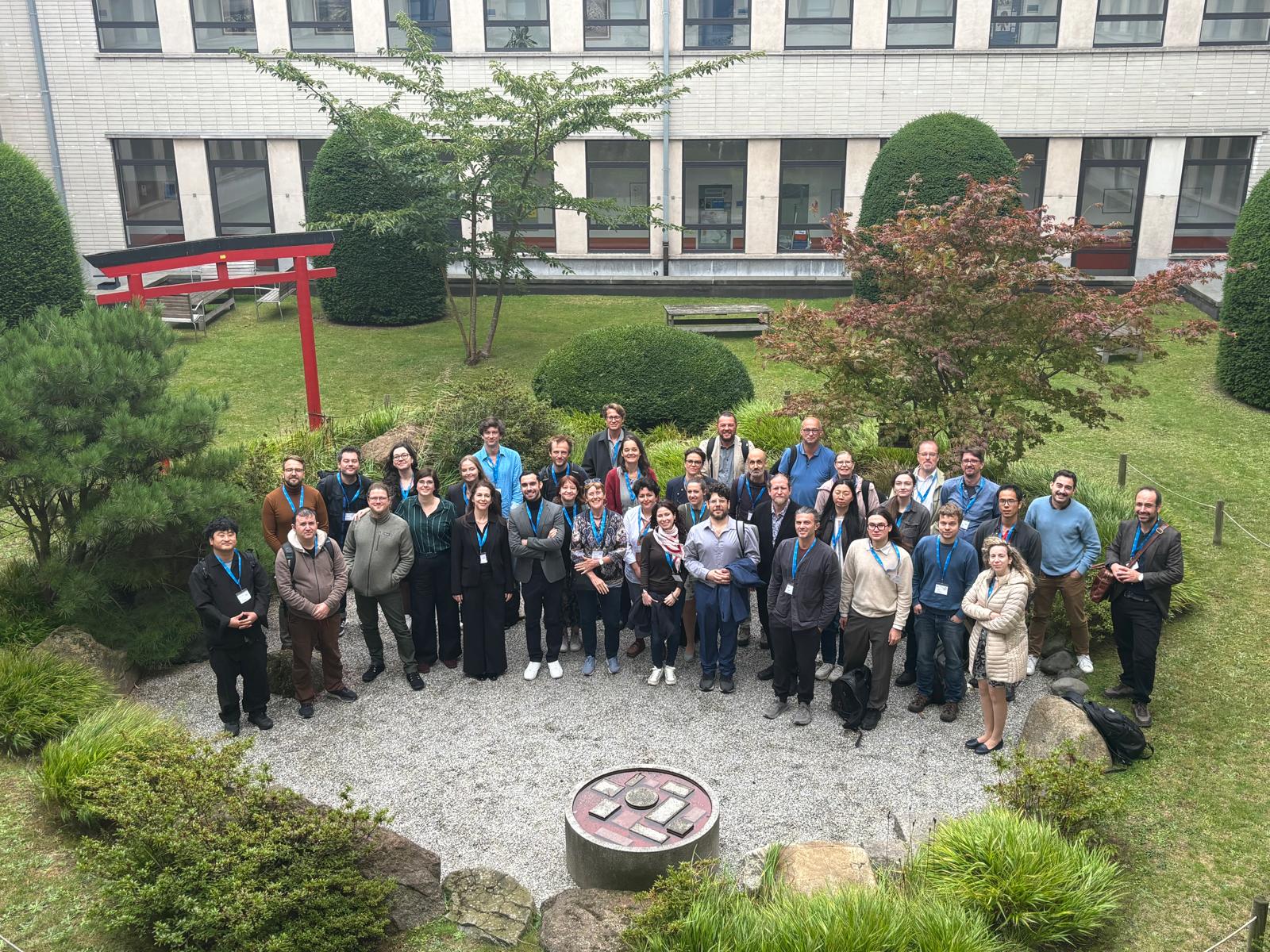
Bytes and Bygones, the third DANES conference, was a resounding success! We would like to give thanks again to the organizers: Katrien De Graef, Gustav Ryberg Smidt, and Mirko Surdi. We would also like to thank all the participants, the new and old faces, for their presence, presentations, and engagement. We hope to see you all again in the next conference, DANES 2027 in Berlin!
The next DANES get-together currently in the works is a Summer School! N. İlgi Gerçek (Bilkent University) and Selim Adali (Social Sciences University of Ankara) are proposing to organize a two-weeks summer school in Turkey. The summer school’s purpose is to provide a training opportunity for students and scholars in ancient Near Eastern studies that do not have a background in digital and computational methods, by providing beginner courses for key methods in the field. It is also intended to provide an opportunity to those with a background in computational methods to improve their technical skills, through advanced courses and a “bring your own data” hackathon. The summer school is open to all students from BA, MA, and PhD levels, as well as early career scholars.
Please fill out this brief form by 8 October so we can design a program that serves your interests and skill level. Your input will directly shape the curriculum. Stay tuned on the DANES mailing list and newsletter for more updates!
Going forward, the annual DANES meetings will alternate between conference and summer school.
Proceedings of Bytes and Bygones (DANES 2026) will be published in two venues. The first is a Nature Humanities and Social Science Special Collection: From Bits of History to Bytes of Data: AI and the Study of the Ancient Near East. This collection is also open for articles that were not presented in the conference–see more details below under Call for Papers. The second publication venue is a special issue of Akkadica (A1 Web of Science; vol. 147/1 - June 2026), which will become a fully open access, online-only journal hosted by openjournals_UGent with no editing fees. This volume marks Akkadica’s 50th anniversary and will be dedicated to digital and computational ANE studies.
There is no rest for the wicked nor for computational scholars of the ancient Near East, as this month’s newsletter shows. In addition to new publications, this newsletter is packed with hybrid lecture series taking place on a weekly or bi-weekly basis in different universities around the world, call for papers for more conferences and events, and two job opportunities.
Additions to DANES Resources
The OpenDANES website includes the DANES Resources tab, a dataset of digital, free to use, online resources for studying the ancient Near East. It can be viewed online or as a downloadable Google spreadsheet. This is a constantly growing dataset, and anyone can contribute new resources through this Google Form and be credited in the dataset.
A couple of resources were added in the past month:
- The al-Ṯurayyā Project (Database)
- The World Historical Gazetteer (Database)
Recent Academic Publications
AI & Antiquity: Journal of Teaching and Technology in Ancient Studies: The inaugural volume of this journal came out this September. The journal’s mission is to explore the intersections of artificial intelligence, inclusive pedagogy, and ancient studies. The publications of the first volume are the proceedings of the First International Conference on Innovation and Technology in Ancient History Education, held online in May 2025 and hosted by the Universitat Autònoma de Barcelona. Topics range from digital epigraphy and ancient language learning to inclusive teaching, rhetorical practice, and the representation of gender and diversity in antiquity.
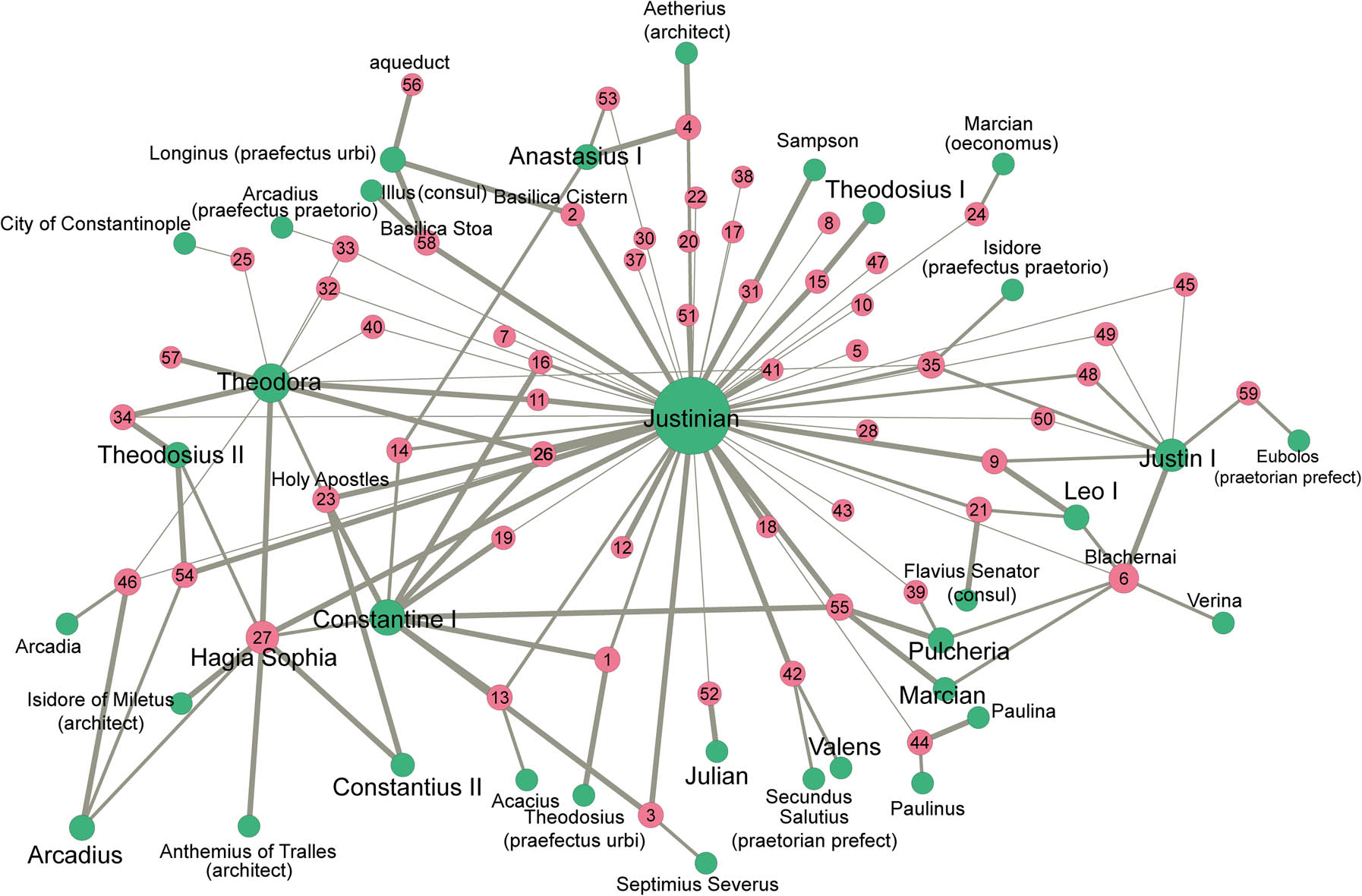
Networks and the City: A Network Perspective on Procopius De Aed. I and the Building of Late Antique Constantinople (article, Open Archaeology), by Marlena Whiting and Marco Weppelmann-Akyildiz, critically analyzes Procopius’ historicity regarding his claims of patronage for Justinian using network visualizations followed by detailed analyses of the archaeological and textual data.
Practical Necromancy for Beginners: A Short Incomplete Opinionated Introduction to Artificial Intelligence for Archaeology and History Students (book, The Digital Press at the University of North Dakota), by Shawn Graham, advocates a new approach for integrating large language models (LLMs) in historical research. It is inspired by the figure of the necromancer in antiquity, who lay outside the boundaries of official religion. The author offers methods to extract “ghosts” from the data that LLMs are trained on, by using LLMs in ways not originally intended by their creators. Its intended readers are those from the humanities without computational background and as a resources for scholars designing introductory AI courses. The book is divided into three parts. The first includes short essays, the second holds two experiments through coding, and the last offers a starter syllabus for instructors.
Proceedings of the Eighth Workshop on Universal Dependencies (UDW, SyntaxFest 2025): Universal Dependencies (UD) is a framework for cross-linguistically consistent treebank annotation that has so far been applied to over 100 languages. It supports comparative and cross-lingual studies as well as multilingual language processing. The eighth workshop includes contributions relevant to languages of the ancient Near East:
- Annotation of Relative Forms in the Egyptian-UJaen Treebank, by Roberto Antonio Díaz Hernández and Daniel Zeman
- A UD Treebank for Bohairic Coptic, by Amir Zeldes, Nina Speransky, Nicholas E. Wagner, and Caroline T. Schroeder
Using AI to identify moral categories in ancient taboo lists (article, Nature Humanities and Social Sciences Communications), by Yitzhaq Feder, the first publication of the special collection From bits of history to bytes of data: AI and the study of the ancient Near East, introduces a bottom-up approach for categorizing morality in ancient societies using large language models (LLMs). By adapting taboo lists from Egypt, Mesopotamia, and Israel into the same format, Feder uses LLMs to decide on the optimal number of categories to which the different taboos can be grouped, and then assessed the validity of the categorizations using human respondents and LLM-based classification models. His results show high-correspondence to his bottom-up approach with the help of LLMs, which provides a more coherent categorization, at least for the dataset at hand, then other frameworks for categorizing morality.
Special Mention
Computational Humanities (book, University of Minnesota Press) edited by Lauren Tilton, David Mimno, and Jessica Marie Johnson, is an open-access collection of articles organized around four questions: Why or why not pursue computational humanities? How do we engage in computational humanities? What can we study using these methods? Who are the stakeholders? Contributions vary from practical to philosophical applications of computational humanities with a forward-thinking approach to establish the field despite its challenges.
History by Algorithms: AI and the Future of Historical Research (book, Springer) by Zvi Lotker, discusses the use intelligent machines to better understand human history, particularly historical and cultural narratives. It is divided into three parts: the first discusses mathematical formulae which can be used to describe historical events; the second employs simple models to assess patterns in history or historical law; the third discusses how large language models (LLMs) are now used and can be used for the study of history. The book includes an appendix for humanists with suggested prompts for explaining mathematical terms used throughout. Historical case studies vary chronologically and geographically.
Datasets Published
Potnia: A Python library for the conversion of transliterated ancient texts to Unicode (Journal of Open Source Software), by Emily Tour, Kabir Manandhar Shrestha, and Robert Turnbull, converts Latin transliterated texts in Linear A, Linear B, Hittite cuneiform, and Arabic into the respective Unicode representation of their script systems.
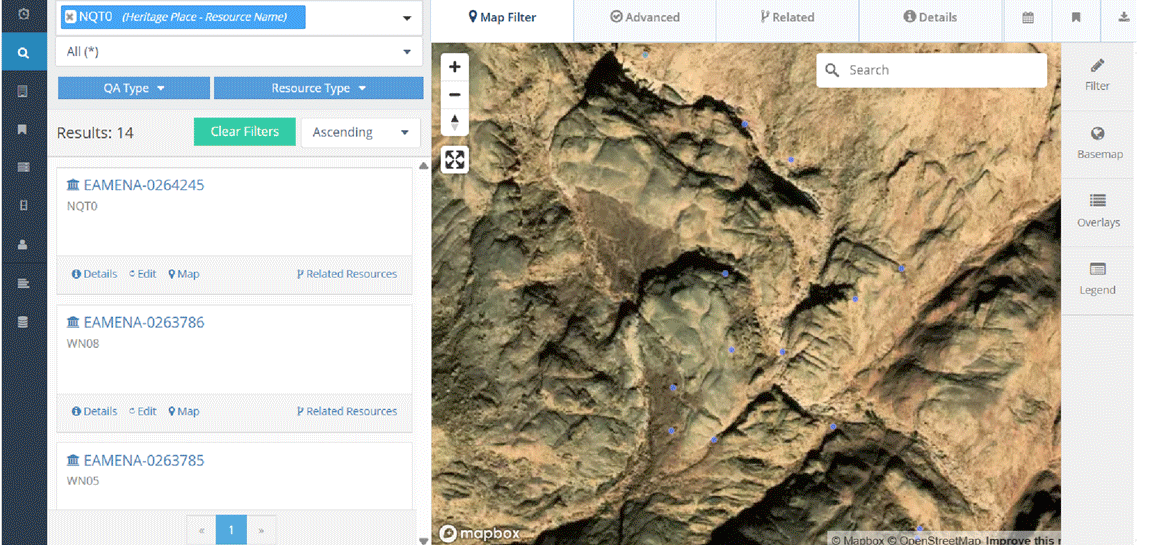
Wadi Naqqat (Eastern Desert, Egypt): Anchor Dataset for FAIR Assessment of Coptic Monastic Heritage (Journal of Open Archaeology Data), by Jan Ciglenečki and Thomas Huet, is an open-access satellite imagery and a cultural heritage survey of 14 heritage sites conducted in 2018–2019, dated to the 4th–6th centuries CE.
Events
Talks and Conferences
The London Centre for the Ancient Near East is hosting the Autumn Lecture Series 2025: Digital Humanities and the Ancient Middle East and Asia. The events are hybrid but registration through eventbrite is required for online participation. Two talks are scheduled for October:
- 6 October, Seraina Nett (Copenhagen): Feeding the Gods: Digital Approaches to the Administration of Regular Offerings in the Ur III Period (registration link), use of social network analysis to trace the connections between individuals and institutions involved in the offerings.
- 20 October, Hana Navratilova: Scribes in Cyberspace (registration link), explores opportunities and challenges in digital Egyptology, given current tools and platforms.
The Department of Conservation & Heritage at the Polish Centre of Mediterranean Archaeology, University of Warsaw, is hosting a Heritage Month seminar series. The initiative aims to introduce archaeologists, heritage professionals, and students to a diverse spectrum of theoretical and practical approaches in heritage studies—ranging from digital preservation and conservation, through material culture and identity, to heritage science and post-conflict recovery. For links to the talks, email seminarium.pcma@uw.edu.pl. The program includes:
- 9 October, Lindsay Der: Safeguarding for whom? An evidence-based examination of the use of digital technology as a conservation tool for Tadmor (Palmyra).
- 16 October, Tomasz Michalik: Archaeological Heritage through Contemporary Eyes: Eye-Tracking in Archeological Heritage Management.
- 23 October, Maria Czarnecka: Adaptive Reuse of Former Hospital Buildings in Wrocław.
- 13 November, Marta Lorenzon: Beyond Function: Cultural Choices in Mediterranean Mudbrick Traditions.
- 20 November, Magdalena Skarżyńska: The Conservation Care System at an Archaeological Site: Old Dongola, Sudan. Conservation vs. Archaeology. Does the Ideal Model Exist?
- 27 November, Rohit Jigyasu: From Rehabilitation, Resilience and Regeneration: Key considerations for the three Rs in Post-conflict recovery of Heritage.
The Digital Archaeology & Heritage Lab at the University of York are holding Digital Lunches, hybrid talks on the topic of Digital Archaeology and Heritage. To receive a zoom link to all or some of the talks, fill the registration form. Upcoming talks are:
- 10 October, Stephanie Döpper, Co-creating smartphone tours at archaeological sites with the ArchaeoTrail App.
- 17 October, Mariana Lopez, Sound Heritage: methods and considerations.
- 24 October, Maki Wardle, Moonlighting at ESA: A Postcard from a Digital Archaeologist in Space.
- 7 November, Despoina Sampatakou, Cultural objects in reality and virtuality: A comparative study in XR.
- 14 November, Florence Smith Nicholls, (Not) Dying of Anticipation: Video Game Archaeologies of Contemporary Play.
- 21 November: Archaeology Data Service: What’s new at ADS/HSDS.
- 28 November, Mark Altaweel, AI for palaeoclimate research.
The Digital Classicist Berlin seminar series, organized by the Ancient World at the Berlin-Brandenburg Academy of Sciences and Humanities and the Berliner Antike Kolleg, continues this academic year (2025/26) with the theme: “Potenziale und Grenzen digitaler Methoden”, in hybrid format (zoom link). Talks in the next couple of months include:
- 14 October, Florian Thiery: Citizen Science trifft Linked Open Data: Potenziale und Grenzen digitaler Methodik.
- 21 October, Julio C. Ruiz: 3D and Virtual Reality Technologies applied to Classical Sculpture: a review of methods, potential, and ongoing challenges.
- 24 October, Adam Anderson: Evaluating Cuneiform in the World Wide Web: fantastic use cases and where to find them.
- 18 November, Sabine Feist, Matthias Lang, Phillipe Pathé: Digitale Zwillinge in der Archäologie – Potenziale und Grenzen am Beispiel der Krypta von San Marco in Venedig.
- 2 December, Lily Grozdanova, Ulrike Peter, Claus Franke, Tim Westphal, Margareth Warburton: The ACCSN Initiative: Discovering the Potential of Digital Methods by Facing their Limits.
Training Opportunities
The Institute of Classical Studies in London is offering several online workshops this upcoming month that are of interest to the DANES community, on the Digital Classicist Wiki or introduction to digital classics and resources in general. Upcoming events are:
- 8 October, Sue Willetts and Gabriel Bodard: Classics Libraries and the Digital Classicist Wiki.
- 29 October, Gabriel Bodard: An Introduction to Digital Classics Approaches.
- 5 November: An introduction to essential resources for Classics and Archaeology research.
- 10 November, Gabriel Bodard and Amy Smith: Ancient Art and Iconography: Digital Classicist Wiki editing session.
Call for Papers
The Department of Digital Humanities at King’s College London will host an international conference, Digital Humanities Today: Critical Inquiry with and about the Digital, on 23-26 June. The conference will explore the evolving role of digital humanities in a world increasingly shaped by digital technologies. They invite proposals that explore (but are not limited to): Computational humanities and computing culture; Design, Interfaces, and Interaction (UX/UI); Digital gaming and play; Digital knowledge and epistemologies and critical technical practices and digital methods; Digital Research Infrastructures and funding; and more. They invite abstracts for papers and panels. Submission deadline has been extended to 12 October through this form.
The 2026 General Assembly (GA) and Web Archiving Conference (WAC), taking place in Brussels, Belgium from 20-23 April, invites submissions that focus on all aspects of sustainable web archiving. Topics can include tools and tool development for sustainable infrastructure; collection development and curation; long-term strategies for addressing legal and ethical issues; access and research use; policies and standards for sustainable web archiving; or environmentally responsible strategies. One can submit 15 minute talks, 5 minute lightening talks, posters, panels, workshops, or tutorials. Submission deadline is 15 October.
The 2026 conference of the Computer Applications in Archaeology (CAA) will take place at the University of Vienna from 31 March to 4 April. The call for papers, posters and workshops has been opened, for 53 sessions. Submissions to standard sessions are extended abstracts of maximum 1,000 words. Abstracts for posters are 200-500 words. They are also accepting workshop proposals for teaching a limited number of participants the basics of a particular skill or concept. Submission deadline is 26 October.
Nature Humanities and Social Sciences is holding a special collection: From bits of history to bytes of data: AI and the study of the ancient Near East. This collection aims at examining the computational and digital study of “greater Western Asia” and its epistemological implications. They invite contributions that consider one or more of the following methodologies for the digitization or computational study of ancient data, while answering or providing case studies to dive into epistemological questions: 3D documentation and visualization of artifacts (e.g. in extended reality environments); Ancient language processing and computational linguistics; Digital database design and implementation; Digital paleography and epigraphy; GIS and spatial analysis; Paleogeography and Paleoenvironment; Population history and DNA; Graph theory and network analysis; Knowledge organization and linked data systems. Submission deadline for full articles is 13 December.
Transformations, a journal by DARIAH, is sending out a Second Call for Contributions on Digital Past(s): Representation, Reconstructions, and Algorithmic Futures. Following the theme of the DARIAH Annual Event 2025, the journal looks for contributions that interrogate the fundamental nature of “the past” as it becomes increasingly mediated, represented and reconstructed through digital infrastructures, algorithms, and interfaces. Specifically, they are interested in contributions regarding topics such as digital storytelling and narratives of the past; the archaeology of digital approaches to the past; AI and big data in historical research; teaching the past through digital methods; and digital archiving and preservation strategies. They welcome research articles, data papers, and workflow papers. Submission deadline is 31 December 2025, Midnight CET (no extension is planned).
Fellowships, Scholarships, and Job Opportunities
The Institute for Assyriology and Hittitology, the muniq.ai group at the LMU Statistical Institute, and the Machine Learning Consulting Unit of the Munich Center for Machine Learning (MCML) is looking to hire a full-stack developer. The developer will work to further develop the eBL platform and analyze ca. 17,000 cuneiform tablets from the Iraq Museum in Baghdad. Applicants should have experience with React.js, Python, TypeScript, MongoDB, Docker, and Git; strong analytical thinking skills; very good English skills; goal and result-oriented approach; project management skills and teamwork. See more details in the job posting.
The Institute for the Study of Ancient Cultures (ISAC) at the University of Chicago invites applications for the position of Web Application Developer. The developer will lead the design, development, and maintenance of web-based tools and infrastructure supporting ISAC’s digital research initiatives. The successful candidate will directly support high-profile initiatives including the Integrated Database, ISAC research datasets, Chicago Center for Cultural Heritage Preservation (C3HP), Center for Ancient Middle Eastern Landscapes (CAMEL), Diyala Project, and the modernization of ISAC’s digital presence, including its public-facing websites and data portals. This is a hands-on development role focused on building and maintaining applications, infrastructure, and data-driven research tools, including support for projects exploring AI-assisted scholarship and data enrichment. See more details in the job posting.
Did we miss relevant articles published in the previous month? Did we miss upcoming events in the next month? Would you like to ensure your news will appear in the next newsletter? Please send us an email at digpasts@gmail.com! Corrections to published Newsletters will be sent via the DANES mailing list.